


How is Cement Manufactured?
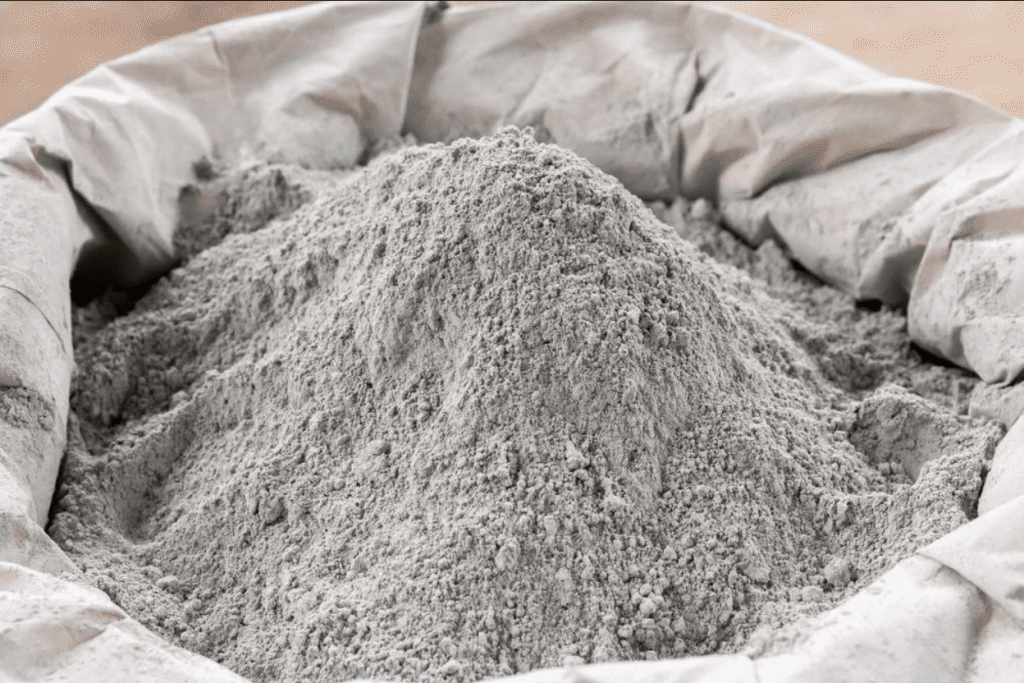
Image Credit: Natee Photo/Shutterstock.com
Cement is manufactured through a multi-stage industrial process that includes mining raw materials (limestone & clay), crushing, grinding, mixing into raw meal, pre-heating, heating in a rotary kiln to form clinker, cooling, adding gypsum, and final grinding. The process focuses on energy efficiency, clinker quality, and pollution control for sustainable operations.
♦ What Are the Types of Cement and Their Uses?
- Ordinary Portland Cement (OPC): Contains about 95% clinker; used for general construction such as houses, roads, bridges, and buildings.
- Portland Pozzolana Cement (PPC): Contains 65–75% clinker blended with fly ash; offers lower heat of hydration and improved durability; ideal for dams, mass concreting, and long-lasting structures.
- Portland Blast Furnace Cement (PBFC): 45–65% clinker with slag; excellent sulfate resistance; preferred for marine works, sewage systems, and chemical-exposed areas.
- Ready Mix Concrete (RMC): Factory-produced concrete delivered directly to construction sites for speed and quality control.
♦ Who Are the Top 10 Cement Companies in India?
Based on installed capacity (MTPA) as of September 2025:
- UltraTech Cement (~186 MTPA)
- Adani Cement (Ambuja + ACC, 100+ MTPA)
- Shree Cements (~62.8 MTPA)
- Dalmia Bharat (~45 MTPA)
- JK Cement (~25 MTPA)
- Nuvoco Vistas (~25 MTPA)
- Ramco Cements (~20 MTPA)
- Birla Corporation (~16 MTPA)
- Heidelberg Cement (~13 MTPA)
- Prism Johnson (~7 MTPA)
♦ What Are the Global Trends in the Cement Industry?
Key global trends include the adoption of alternative fuels (AFR), carbon capture technologies (CCUS), AI-driven plant automation, and increased use of Supplementary Cementitious Materials (SCMs).
The SCM market alone is projected to generate USD 40–60 billion by 2035.
India expects 7–9% annual growth, with increasing demand in the Middle East and Africa.
♦ What Is the History of the Cement Industry in India?
1889–1947: Beginning in Kolkata; first cement plant at Porbandar in 1914; production reached 1.8M tonnes by independence.
1947–1982: Industry under government regulation; capacity grew to 30M tonnes.
1982–2000: Liberalisation era; capacity expanded to 109M tonnes.
2000–2020: Privatization & consolidation; Indian cement capacity surpassed 550M tonnes.
2020–Present: Rapid mergers & acquisitions led by Adani and UltraTech; significant modernization and capacity expansion.
♦ What Are the Key Raw Materials for Cement Production and Their Costs?
Primary raw materials include limestone, clay, gypsum, fly ash, and slag.
Cost distribution in cement manufacturing:
- Raw Materials: 25%
- Power & Fuel: 26%
- Transport: 33%
- Others: 16%
♦ How Do National Players Benefit in the Cement Sector?
Large national cement companies benefit from economies of scale and integrated supply chains.
Advantages include:
- Better pricing power: 10–15% advantage
- Higher EBITDA margins: 200–300 bps improvement
- Lower logistics costs: 15–20% savings
- Technology-driven efficiency: Better kiln operations, reduced fuel usage
♦ What Is the New GST Rate on Cement After the 2025 Reforms?
The GST on cement has been reduced to 18% (from 28%), effective September 22, 2025, under the 56th GST Council reforms.
This reduction lowers construction costs and boosts infrastructure growth.