


What are PVC Pipes & Fittings? | Types, Applications & Plumbing Guide
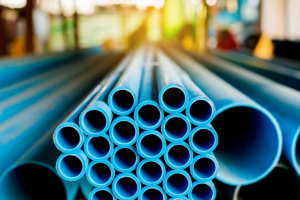
Image Credit : ConstroMat
PVC (Polyvinyl Chloride) is one of the most widely used materials in plumbing, drainage, irrigation, and industrial piping systems. It is durable, corrosion-resistant, lightweight, and cost-effective, making it suitable for water supply, sewer systems, chemical transport, and various household and industrial applications.
♦ What are the Types of PVC Pipes?
PVC pipes come in several variants used across plumbing, industrial, and drainage systems. Based on manufacturing and material characteristics, the main types of PVC pipes include:
uPVC (Unplasticised PVC):
uPVC pipes do not contain plasticizers, making them rigid and highly durable. They are lightweight, economical, and ideal for potable water supply, commercial plumbing, residential water lines, and industrial fluid transport.
CPVC (Chlorinated PVC):
CPVC pipes are manufactured by chlorinating PVC resin, giving them higher temperature resistance. They are used for hot and cold water systems, household plumbing, industrial pipelines, and corrosion-prone environments.
Benefits of uPVC & CPVC:
- Lightweight and easy to install
- Corrosion-resistant and durable
- Cost-effective with low maintenance
- Ideal for potable water supply
- High strength and long service life
♦ What are Other Popular Types of Plastic Pipes?
ABS Pipes (Acrylonitrile Butadiene Styrene):
ABS pipes are known for high-impact strength, rigidity, and resistance to extreme temperatures (−40°C to +60°C). They are used in industrial applications, drainage systems, and potable water transfer.
HDPE Pipes (High-Density Polyethylene):
HDPE pipes are lightweight, flexible, and highly durable. They are ideal for cable ducting, natural gas transfer, drainage, sewage, irrigation, borewells, and agricultural applications. HDPE stands out for its long life and excellent chemical resistance.
♦ Which Type of Plastic Pipe is Best for Water?
Different PVC variants are used depending on the water application:
- Potable Water: uPVC & ASTM PVC pipes
- Hot & Cold Water: CPVC pipes
- Sewage & Drainage: uPVC drainage pipes
♦ What are the Primary Applications and Standards for PVC?
PVC pipes are used in water supply, drainage, vent systems, process lines, sewer systems, and pipe relining. Important PVC standards include:
1. Water Pipe Standards:
- ASTM D1785 – Schedule 40 & 80 (1/8″ to 24″)
- ASTM D2241 – SDR 13.5 to 64 (1/8″ to 36″)
- AWWA C900 – Water mains 4″ to 60″
- AWWA C909 – PVCO water distribution pipes 4″ to 30″
2. Drain, Waste & Vent (DWV):
- ASTM D2665 – Schedule 40
- ASTM F891 – Cellular core (1¼” to 12″)
3. Process Pipe:
ASTM D1785 & D2241 – Pressure-rated piping.
4. Sewer Pipe:
- ASTM D3034 – SDR sewer pipes (4″ to 15″)
- ASTM F891 – Sewer pipe ODs (2″ to 18″)
5. Drain Pipe:
ASTM D2729 or ASTM D3034.
6. Folded PVC Pipe (Relining):
- ASTM F1504 – Underground pipelining (4″ to 15″)
- ASTM F1871 – Sewer relining (4″ to 18″)
*Note: Many modern ASTM standards include multiple product variations. Always check full product identification before use (e.g., F891 Sch 40 DWV vs F891 PS50 Sewer).*
♦ What Types of Joint Systems Are Used for PVC Pipes?
PVC pipes use different joint systems depending on application and pressure requirements:
- Solvent Cement Joints: Used for above-ground piping and smaller underground systems.
- Gasketed Joints: Commonly used for large-diameter underground pressure and non-pressure pipes.
- Transition Joints: Include flanged, threaded, grooved, union, and patented connectors.
♦ How Does PVC Pipe Behave at Different Temperatures?
Temperature affects pressure rating and stiffness of PVC pipes. Standard pressure ratings are measured at 73°F (23°C). At higher temperatures, PVC requires de-rating factors to determine safe working pressure.
Key Points:
- PVC pressure capacity decreases as temperature increases.
- Manufacturers provide de-rating tables for accurate pressure calculations.
- Typical continuous-use temperature limit for PVC: 140°F (60°C).