
How to choose the right blocks, compare quotations and get a well-built wall
A low block price can look attractive until freight, broken pieces and extra labour push up the bill. When buying AAC blocks, the useful question is how much it will cost to complete the wall to the required quality.
AAC can help contractors build lighter walls and work faster. Getting that value starts before the first truck arrives. For contractors and engineering, procurement and construction (EPC) teams, this guide explains what to choose, what to ask suppliers and what to check at site.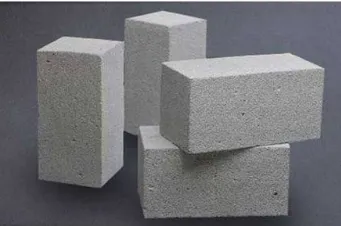
AAC blocks explained
AAC stands for Autoclaved Aerated Concrete. These are factory-made wall blocks containing millions of tiny air pockets. Manufacturers use ingredients such as cement, lime, fly ash or sand, water and an ingredient that creates the pores. The blocks are cut to size and hardened using steam under pressure. The factory equipment used for this is called an autoclave.
The air pockets make AAC lighter for the same volume than conventional solid clay brickwork and help slow heat passing through a wall. One large AAC block can still weigh more than one small brick, so compare wall weight rather than individual pieces.
AAC is commonly used for partitions and walls within a building's concrete or steel frame. Walls that support floors or roofs need a specifically approved structural design; the block's strength alone does not establish suitability.
Where AAC can make a difference
On projects with repeated wall layouts, larger blocks and fewer joints can improve laying speed. Accurate dimensions can also reduce correction work and help control the amount of mortar used to join blocks and plaster used to finish the wall. These gains depend on trained masons, suitable tools and a steady supply of blocks.
Lighter walls reduce the weight carried by the building. Count any steel or concrete savings only when the structural engineer has included them in the approved design. Changing blocks after the structure is built does not recover steel already used.
AAC's insulation can improve indoor comfort and reduce heat entering through external walls. Actual cooling savings also depend on the roof, windows, shading and air-conditioning system, so a manufacturer's percentage saving should not become your project budget assumption.
AAC is non-combustible, but fire resistance and sound insulation depend on the finished wall. For a hotel, hospital or other project with specified ratings, ask for the relevant test report covering the proposed thickness, joints and finishes. Include the treatment of pipe and cable openings in the approved wall details. [6, 4]
For a small job, dependable local brick supply and a familiar masonry team may still offer better value. Compare the alternatives against the project's actual wall requirements and delivery conditions.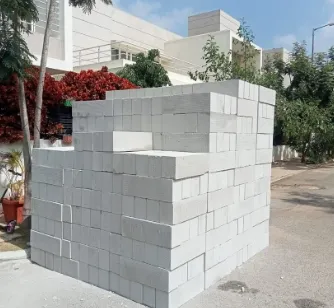
Choose the specification before the brand
Ask the Architect to approve the following before seeking prices. This gives every supplier the same requirement to quote against.
What to specify | What it means for the buyer |
|---|---|
Exact dimensions and wall thickness | State length, height and thickness in millimetres. Choose thickness from the approved drawings. |
Strength grade | How much compressive pressure the block withstands. Reports may use MPa or N/mm²; these are equivalent units. |
Dry density | The weight of one cubic meter of dry blocks, usually stated in kg/m³. Check it alongside strength; the lightest block is not automatically the right choice. |
Required wall performance | Specify any fire, sound, insulation, fixing requirements, together with the appropriate finishes. |
Product variants matter. BirlaNu publishes a minimum strength of 4 N/mm² for its standard Aerocon AAC blocks and 6 MPa for Aerocon 6X. Their listed density ranges also differ. Ordering only by brand name leaves a meaningful specification undecided.
Request reports showing compliance with IS 2185 (Part 3), the Indian AAC block standard, for the proposed product and supplying factory. Check strength, dry density, dimensions and drying shrinkage, meaning contraction as blocks dry. If Bureau of Indian Standards (BIS) certification is claimed, verify the licence and factory and product coverage. Agree how samples will be tested and deliveries accepted.
AAC block sizes vary by manufacturer and country, but in India, the most commonly available sizes are:
600 × 200 × 100 mm – commonly used for internal partition walls
600 × 200 × 150 mm – widely used for internal and external walls
600 × 200 × 200 mm – commonly used for thicker external walls
600 × 200 × 75 mm – suitable for certain lightweight partition applications
Some manufacturers also offer 625 × 240 mm or other dimensions, so the exact sizes should be checked against the manufacturer's product catalogue.
Important: AAC block dimensions and permissible tolerances can vary by product and applicable Indian standards. Wall thickness should be selected based on structural, thermal, acoustic, fire, and architectural requirements—not size alone.
Calculate how many blocks you need
Start with wall area, not the building's floor area. Multiply each wall's length by its height, deduct door and window openings, and group walls by thickness.
For a simple example, assume 100 square metres (m²) of net wall area and a thickness of 150 mm, or 0.15 metres. The wall volume is 100 × 0.15 = 15 cubic metres (m³).
If the selected block measures 600 × 200 × 150 mm, each block occupies 0.6 × 0.2 × 0.15 = 0.018 m³. Dividing 15 by 0.018 gives roughly 834 blocks before allowing for mortar joints, cutting and wastage. This is a planning estimate; have the site estimator confirm the order quantity.
Check the actual size on the quote. For example, JK Lakshmi's calculator uses a 600 × 250 mm block face, while BirlaNu lists 600 × 200 mm. Different dimensions change both the piece count and the meaning of a price per block. [9, 4]
Compare the cost of the completed wall
Request the delivered block rate per cubic metre, then compare the total cost per square metre of finished wall for the approved design. If a quote is per piece, convert it using the block's dimensions.
Your comparison should include blocks, freight, unloading, lifting to working floors, cutting and breakage, jointing mortar, labour, required reinforcement and movement details, and finishes on both sides. Compare taxes on the same basis. Also check payment terms and how long the price remains valid.
A lower factory price can lose its advantage after transport and handling. For a project in Ranchi or elsewhere in Eastern India, ask which plant will dispatch the material, what truck can reach the site, and how quickly shortages can be replaced.
For a substantial order, build and finish a small trial wall before committing to the full quantity. Record labour time, mortar consumption, cutting losses and finish quality. Use those observations to check the contractor's rate and the supplier's claims. Manufacturer calculators themselves caution that estimates vary with design and working conditions.
Check the delivery and protect the stock
At arrival, match the delivery challan, or delivery note, with the purchase order. Check the brand, product, size, quantity and available batch identification. Measure sample blocks against the agreed dimensions and inspect for cracks, major corner damage and water saturation.
Photograph shortages or damage, record them on the delivery acknowledgement and notify the supplier within the agreed claim period. Set questionable stock aside for the site engineer to assess. Visual checks help identify damage; laboratory tests establish strength.
Keep blocks on a level base clear of wet ground, protect stacks from rain and unload without dropping them. Moisture adds weight, so a wet block's site weight is not a reliable measure of its specified dry density.
Good installation protects your purchase
Ask for a site demonstration if the masonry team is new to AAC. Start with a level first row of blocks and follow the approved details for joints, door and window openings, and connections to the building frame. The specified movement gaps and reinforcement help control cracking.
Use the specified AAC jointing mortar at its recommended thickness.A thicker joint or a different mortar changes consumption and performance. [16]
Understand the water instructions. AAC blocks are cured at the factory. Surface dampening before laying, water curing after jointing, and plaster curing are separate matters. Some formulated mortars need no water curing after application; this does not mean that every mortar or plaster has the same requirement. Follow the selected products' written instructions.
Plan electrical grooves, plumbing routes and heavy fixtures before walling starts. Use suitable cutting tools and anchors rated for AAC; cabinets and water heaters may require designed supports. External walls and wet areas need suitable finishes and waterproofing details. Buying good blocks works best when these details are included in the job from the outset.
Request an AAC block quotation from ConstroMat
For projects in Jharkhand, Bihar, West Bengal & Orissa, submit RFQ with your site PIN code, approved block specification, size-wise quantities and required delivery dates with ConstroMat. Ask for available brands and a quotation that clearly states freight, unloading, taxes and delivery terms. A clear requirement makes supplier offers easier to compare and helps your site receive what it actually needs.
Written by
ConstroMat
Expert contributor at ConstroMat, sharing insights on construction materials, industry trends, and best practices.
View all posts